You hear it everywhere: breakfast is the most important meal of the day.
But is that actually true?
To a certain extent… yes, it is.
Think of it this way: when you take a few minutes in the morning to write down your intentions for the day, studies show that you’re more likely to unconsciously make decisions throughout the day that align with your goals.
The same idea applies to food.
When you start your day with a balanced, minimally processed, high-protein breakfast, you’re setting the tone for the rest of your day.. not just physically but mentally too.
In fact, eating a high-protein breakfast can significantly reduce the chances of overeating later in the day by helping you feel fuller, more satisfied, and more in control of your hunger.
And honestly, that matters more than most people realize.
Because breakfast isn’t just about “eating something in the morning.”
It’s about giving your body the kind of fuel that supports:
- better energy
- more stable blood sugar
- improved focus
- fewer cravings
- and healthier food choices throughout the day
So if your goal is to feel better, have more energy, support your fitness goals or simply create healthier habits.. your first meal can make a real difference.
So, what Is a healthy breakfast?
A healthy breakfast should be balanced, nourishing, and satisfying.
That means it should include a combination of:
1. Protein
Protein is one of the most important parts of a healthy breakfast because it helps keep you full, supports muscle recovery, balances hunger, and helps prevent unnecessary snacking later in the day.
Good breakfast protein sources include:
- eggs
- Greek yogurt
- cottage cheese
- protein oats
- chicken or turkey sausage
- smoked salmon
- protein smoothies
- tofu or tempeh
2. Carbohydrates
Carbs are not the enemy, especially in the morning. Your body needs carbohydrates for energy, brain function, and overall performance throughout the day.
Good breakfast carb sources include:
- oats
- whole grain toast
- fruit
- sweet potato
- granola (with minimal added sugar)
- rice cakes
- whole grain wraps
3. Healthy Fats
Healthy fats help with hormone support, satiety, and keeping your meals more balanced.
Good sources include:
- avocado
- nut butter
- chia seeds
- flaxseeds
- nuts
- full-fat Greek yogurt
- egg yolks
4. Fiber
Fiber helps support digestion, gut health, and fullness.
You can add more fiber to your breakfast through:
- berries
- bananas
- apples
- oats
- seeds
- vegetables
- whole grains
Some easy examples are:
- Greek yogurt with fruit, granola, and chia seeds
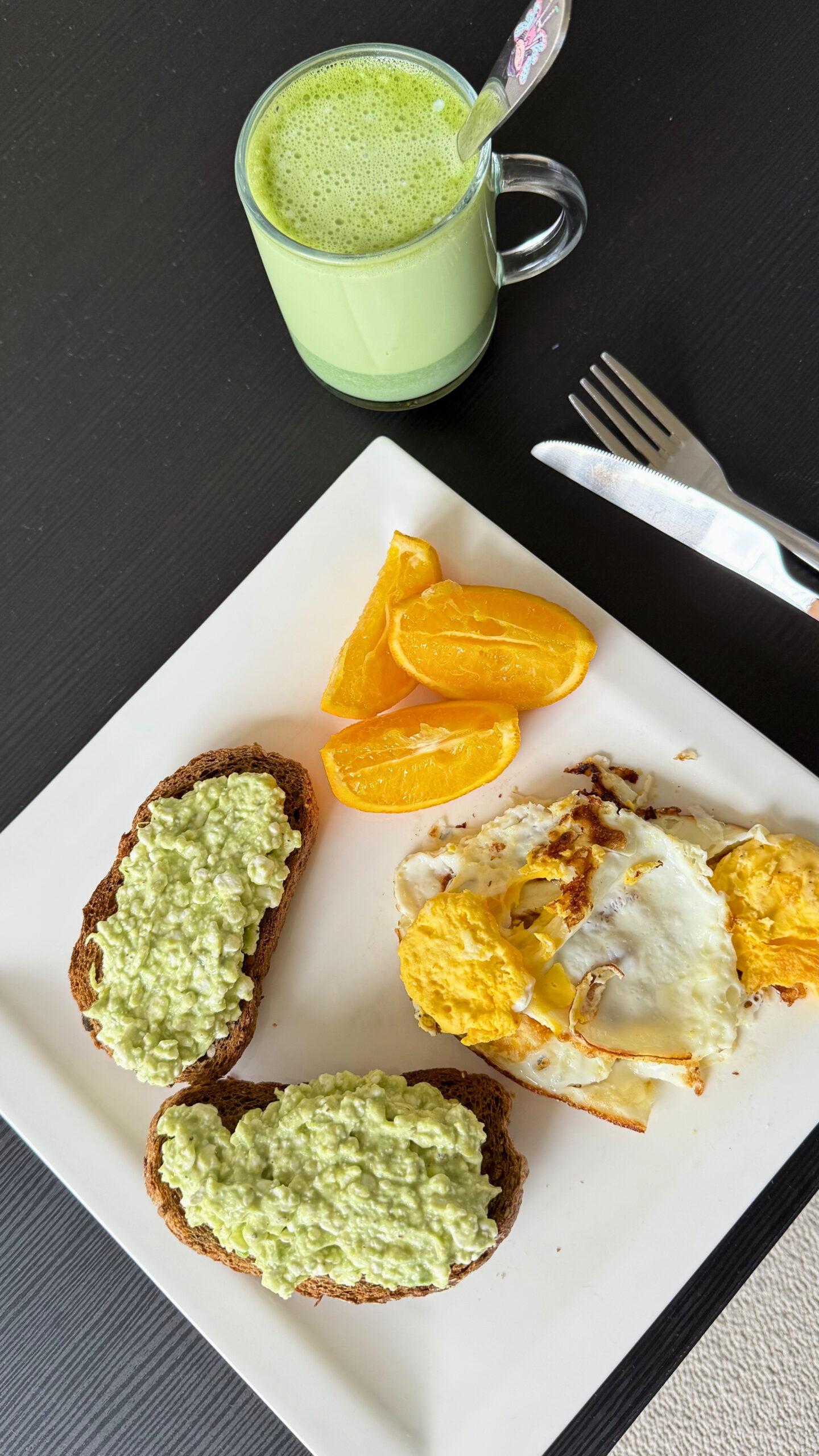
- Eggs with avocado, sourdough toast and fruit
- Protein oatmeal with banana and nut butter
- A smoothie with protein powder, berries, spinach, and almond butter
- Cottage cheese with fruit and rice cakes
- A breakfast wrap with eggs, veggies, and turkey
The goal is simple:
Build a breakfast that actually keeps you full, energized, and satisfied.
Does it matter what time you eat breakfast?
This is where a lot of people get confused.
And honestly?
No, it doesn’t really matter what time you eat breakfast.
What matters most is that you create a rhythm that works for your body and that when you do eat your first meal of the day, you make it count.
Some people naturally wake up hungry and feel best eating shortly after they get up.
Others don’t feel hungry first thing in the morning and prefer to eat later.
Both are completely okay.
You do not have to force yourself to eat at 7 AM just because someone online told you that’s what “healthy people” do.
What matters more is:
- eating intentionally
- choosing balanced meals
- listening to your body
- and staying consistent with habits that support your lifestyle
At the end of the day, your first meal is still your break-fast, the meal that breaks your fast.
And whenever that meal happens, it should ideally support your body with the kind of nutrients that help you feel your best.